Equipment
Mask types: oxygen and NIV interfaces
Identify what a mask is connected to: an oxygen flowmeter, an air-entrainment system, an aerosol generator, or a positive-pressure device. Similar-looking interfaces can deliver very different therapy.
Oxygen and aerosol masks
These are adult study ranges. Follow the specific device label and prescribed oxygen target; delivered FiO2 also depends on fit, breathing pattern, and total flow.
| Interface | What to recognize |
|---|---|
| Simple face mask | No reservoir bag. A common adult flow range is 5–10 L/min, with roughly 40–60% FiO2. Lower flow can allow CO2 rebreathing. FiO2 is variable, not precisely set. |
| Partial-rebreather mask | Has a reservoir bag; allows some exhaled gas to enter the reservoir. Inspect the actual valve arrangement rather than identifying it by the bag alone. |
| Non-rebreather mask (NRB) | Reservoir plus one-way valve arrangement limits rebreathing and room-air entry. Common adult flow is 10–15 L/min; BTS describes roughly 60–90% FiO2 at 15 L/min. Fill the reservoir before use and maintain inflation during inspiration. It does not reliably deliver 100% oxygen. |
| Venturi mask | An adapter entrains room air to deliver a labeled oxygen concentration when used correctly. Keep entrainment openings clear and use the flow printed on that adapter. |
| Aerosol mask or tracheostomy collar | Connects to an appropriate humidification or aerosol system. Delivered concentration depends on the source and whether total flow meets demand. A tracheostomy collar directs gas to the stoma. |
A reservoir oxygen mask does not deliver assisted breaths. A bag-mask resuscitator is a different device used to provide positive-pressure ventilation.
Venturi: source flow is not total flow
The flowmeter supplies oxygen; the adapter adds room air. Total delivered flow = oxygen flow + entrained air.
Read the percentage and minimum flow on the adapter. Color coding varies between products and markets. Inadequate total flow, blocked entrainment ports, or altered assembly can change oxygen delivery; the color alone is not a prescription.
NIV masks: match the interface to the circuit
NIV interfaces include nasal masks or pillows, oronasal masks covering nose and mouth, and total-face masks. Choose the appropriate size and check the seal, skin, comfort, and unintended leaks. Overtightening can worsen fit and cause pressure injury.
Vented masks have an intentional exhalation leak. Non-vented masks require a compatible circuit or ventilator that provides an exhalation pathway. Never block an intentional exhaust port or substitute a different mask without verifying the circuit configuration.
An NIV interface helps deliver the pressure generated by the machine. The mask alone does not determine CPAP, inspiratory pressure, or FiO2.
Study example
A Venturi adapter is labeled 28% with a specified oxygen input flow. That flowmeter setting is not the total air-and-oxygen flow reaching the mask. Confirm the adapter, input flow, unobstructed ports, and patient response before interpreting the labeled concentration.
For nasal high flow, see HFNC. For the machines behind positive-pressure interfaces, see ventilators.
Mask images
Compare the interfaces below. Select an image to view it larger.
Oxygen and aerosol masks
Simple face mask
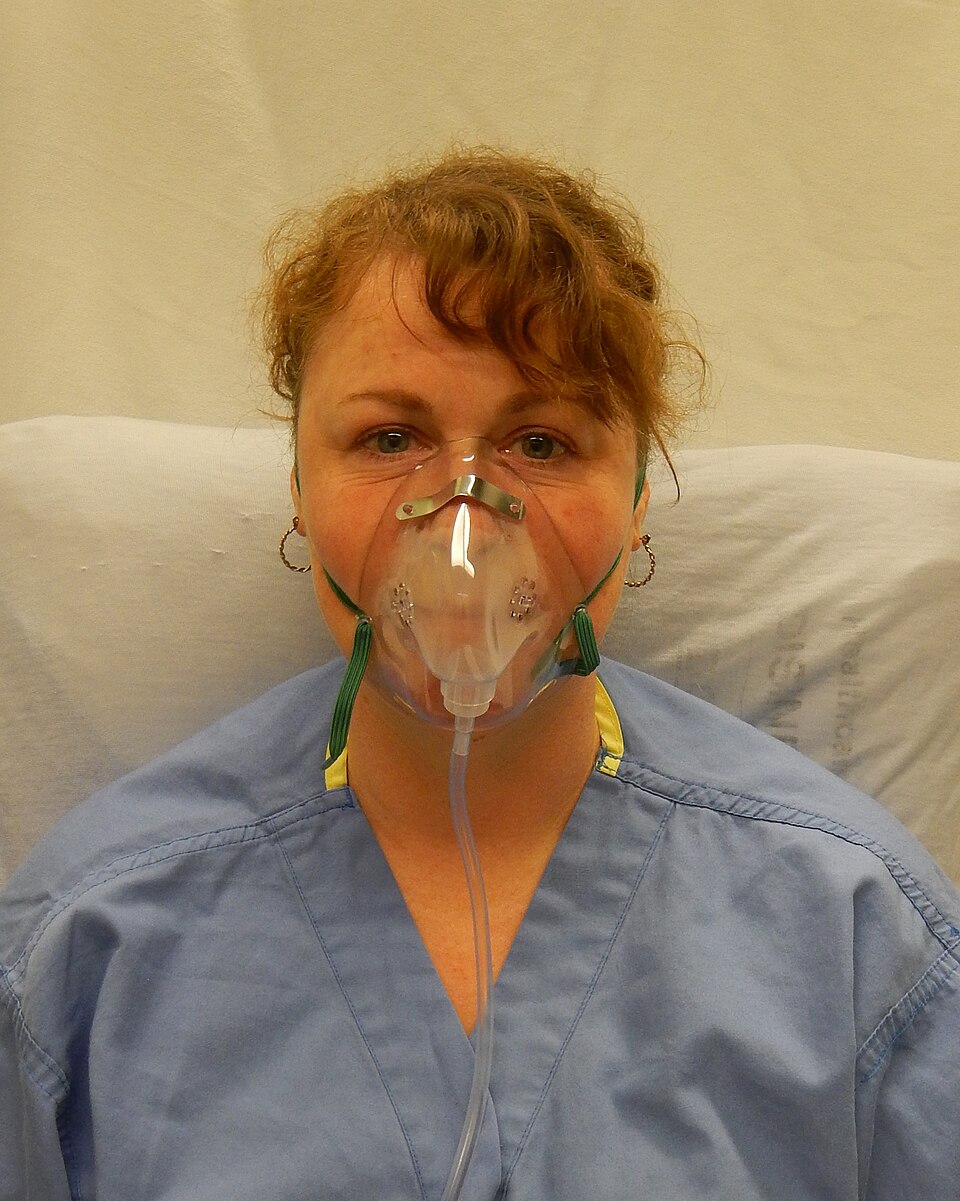
Recognize the open side ports, narrow oxygen tubing, and absence of a reservoir bag.
Simple face mask by James Heilman, MD. CC BY-SA 4.0. View larger.

Partial-rebreather mask
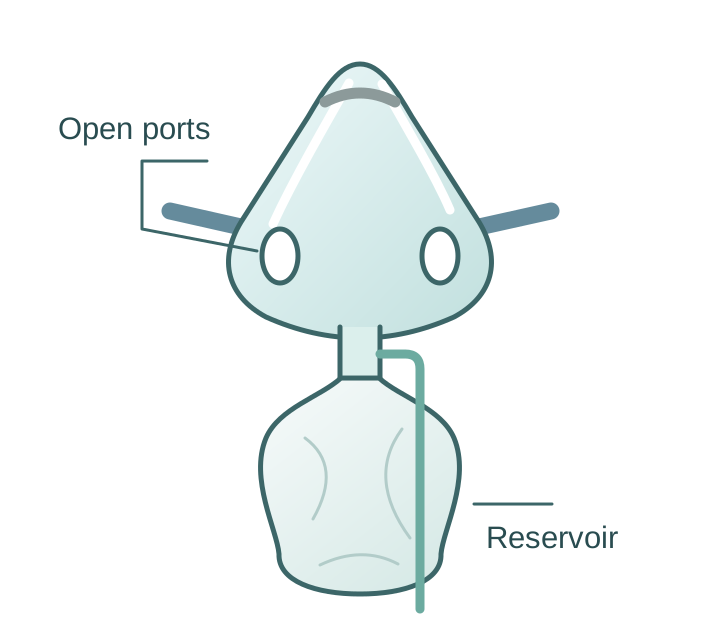
Schematic. The reservoir communicates with the mask without a one-way valve at the bag connection. Inspect the actual valve arrangement; a bag alone does not identify an NRB.
Partial-rebreather mask schematic by RTstudy.com. CC BY 4.0. View larger.
Non-rebreather mask
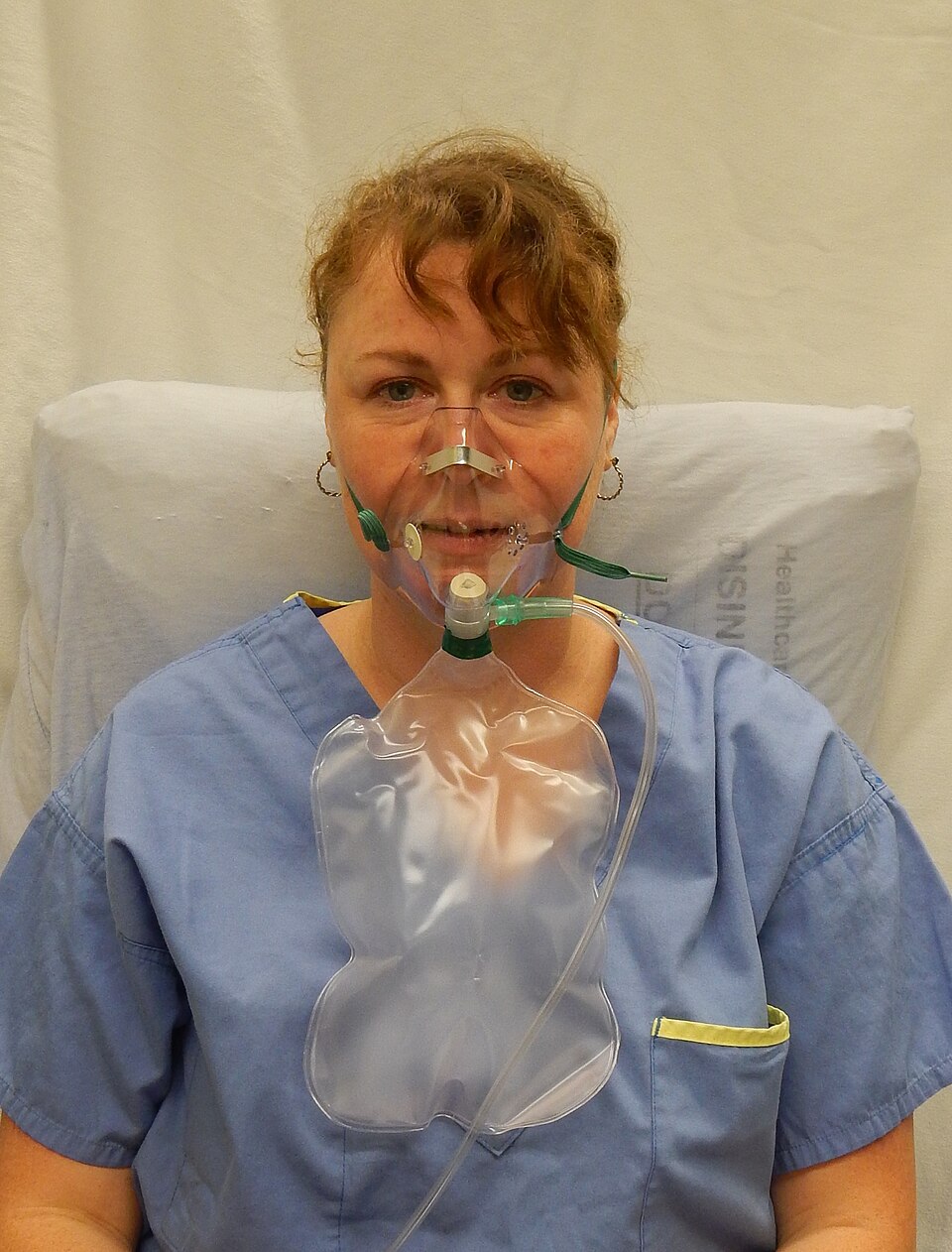
Look for the reservoir and one-way valves. Some designs leave a side port open; check the specific device.
NRBer by James Heilman, MD. CC BY-SA 4.0. View larger.

Venturi mask
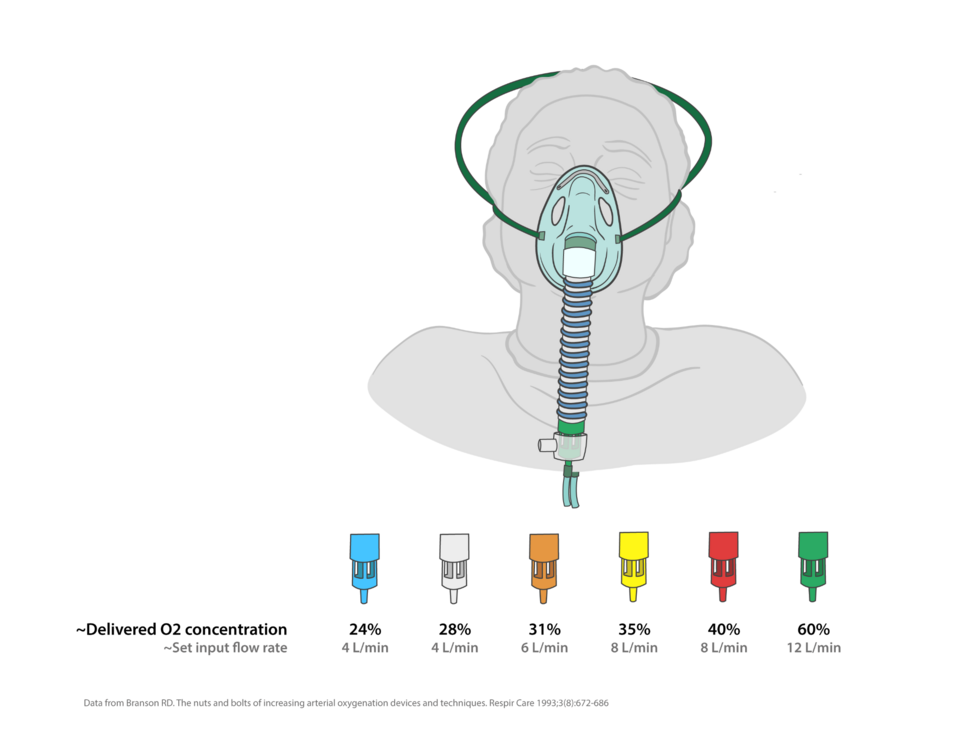
Adapter colors and flows in this diagram are examples, not a universal standard. Follow the label on the actual adapter; total delivered flow also includes entrained room air.
Adult with air entrainment (Venturi) mask by Open Critical Care and World Health Organization. CC BY 4.0. View larger.

Aerosol mask
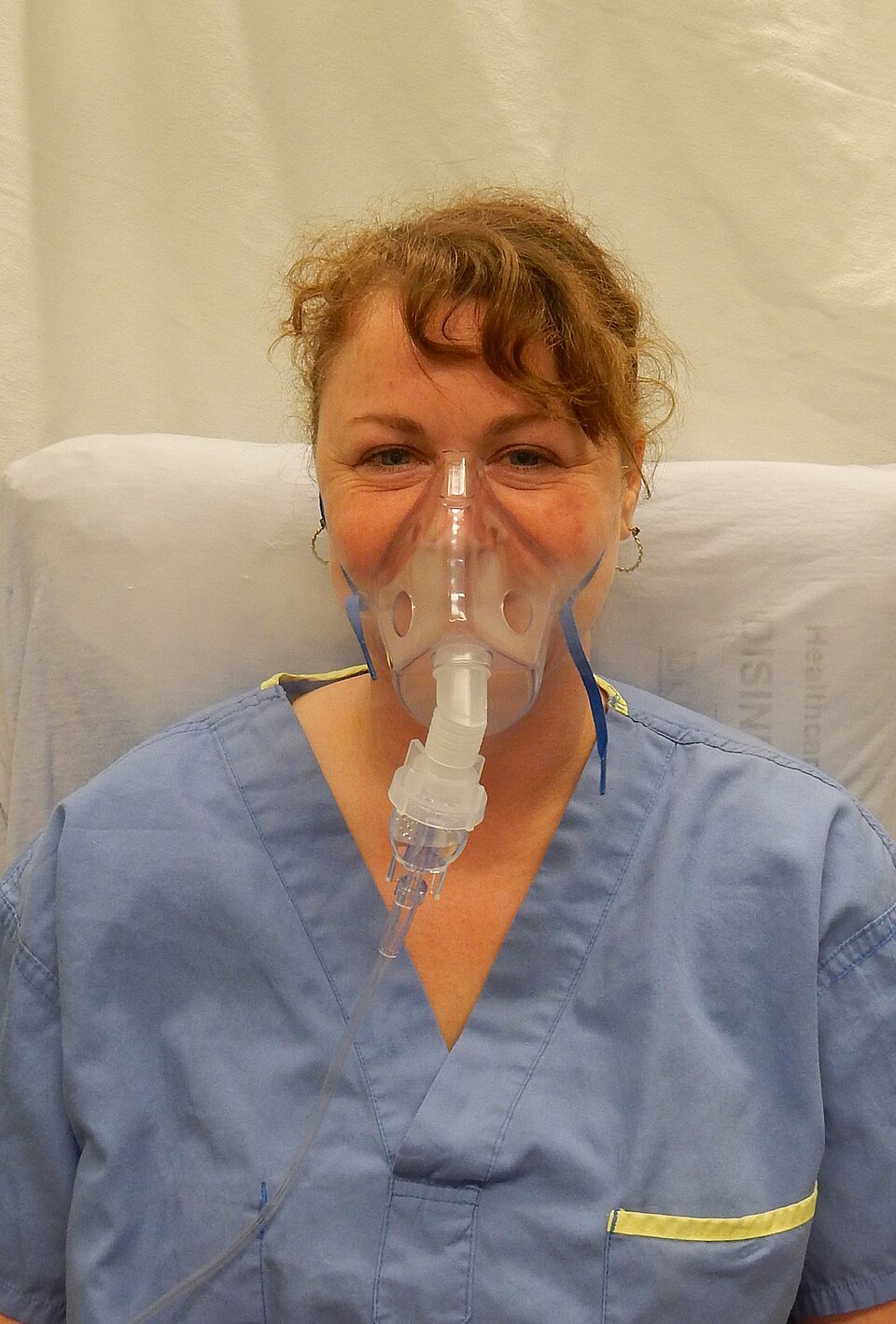
This aerosol mask is attached to an SVN cup. Aerosol masks can also connect to compatible large-volume systems through large-bore tubing.
Nebulizer by James Heilman, MD. CC BY-SA 4.0. View larger.

Tracheostomy collar
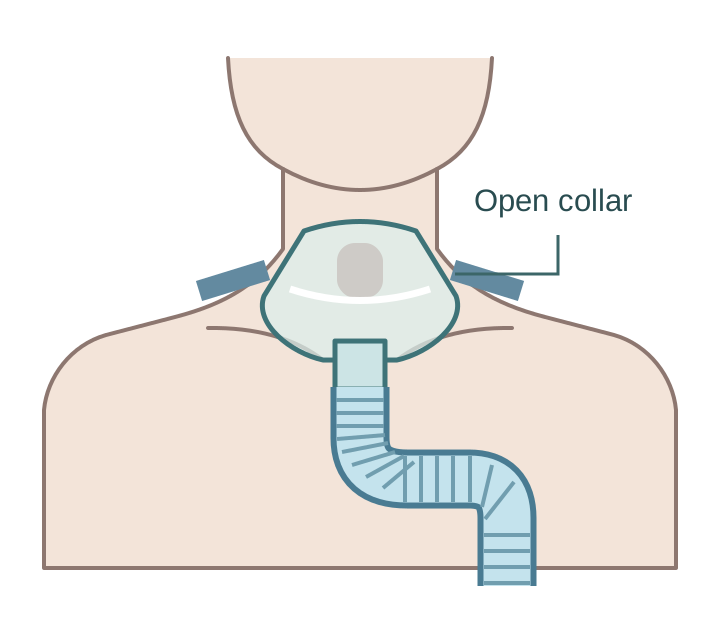
Schematic. A tracheostomy collar directs gas over the stoma rather than the nose and mouth. It is an open interface, not a sealed ventilator connection.
Tracheostomy collar schematic by RTstudy.com. CC BY 4.0. View larger.
NIV interfaces
Nasal mask
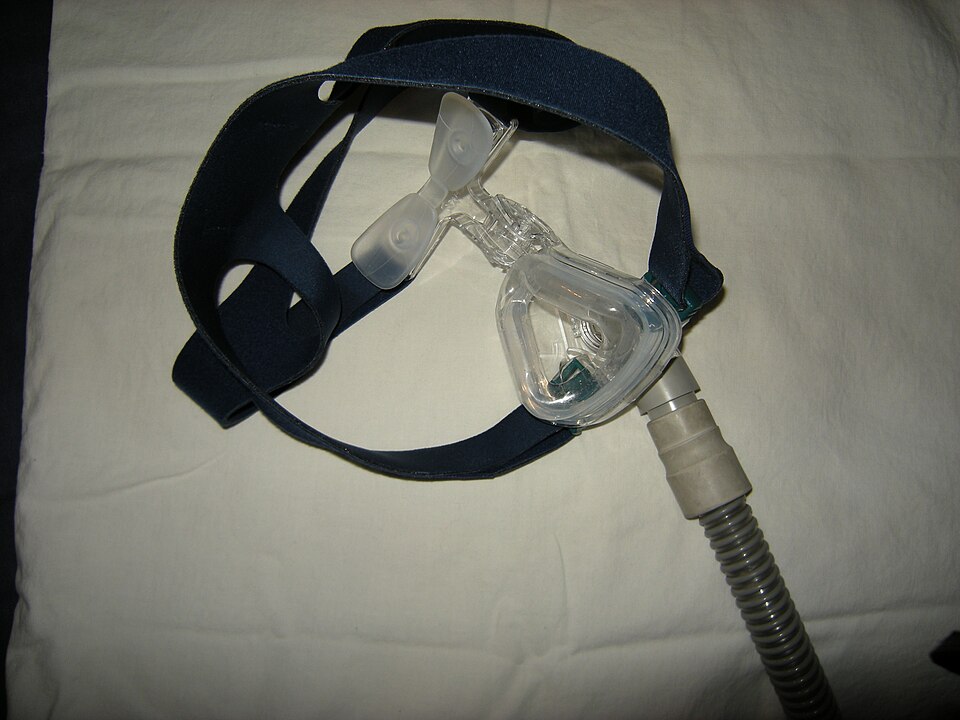
The cushion seals around the nose, leaving the mouth uncovered. The upper pads rest on the forehead.
CPAP mask 01 by Joe Mabel. CC BY-SA 3.0. View larger.

Nasal pillows
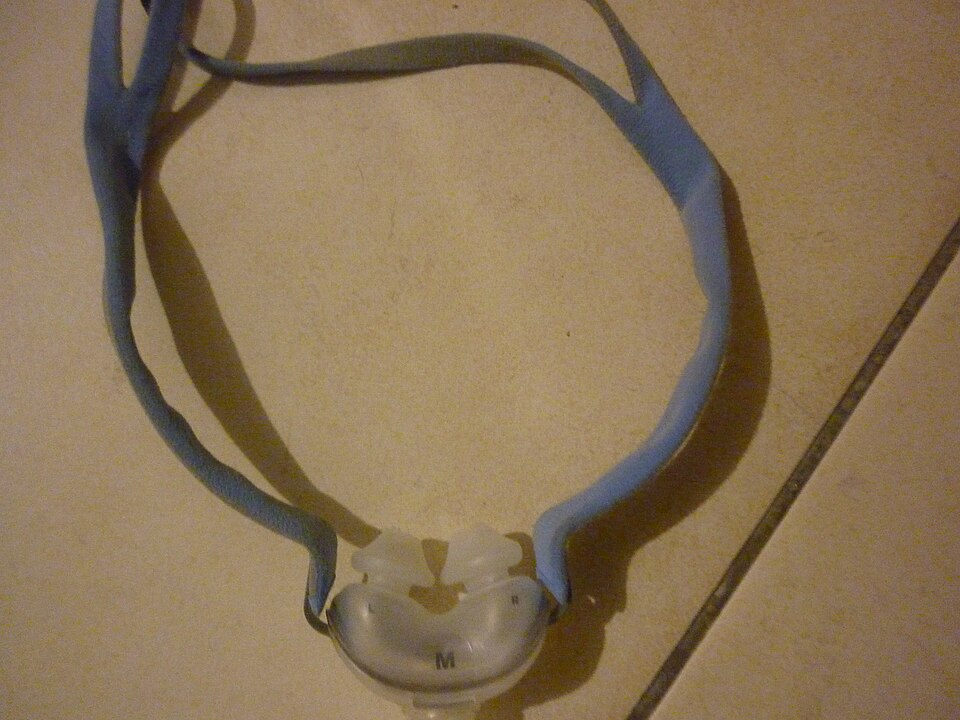
Two small pillows seal at the nostrils. They differ from a mask enclosing the nose and from an open oxygen cannula.
Masque narinaire by Roda. CC BY-SA 4.0. View larger.

Oronasal mask
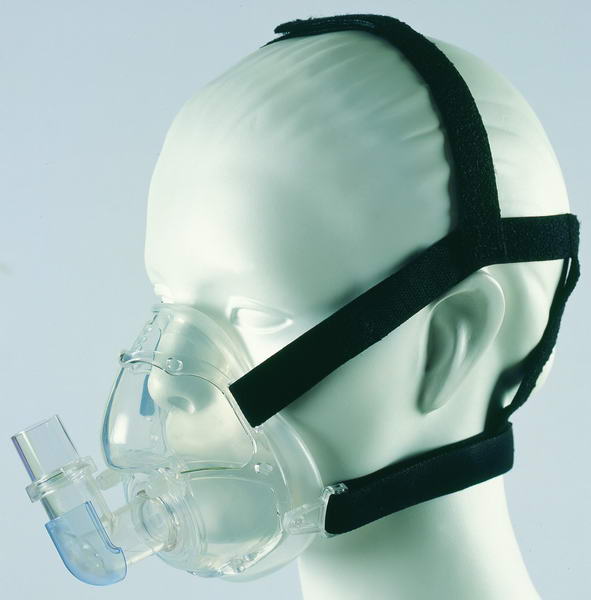
Often sold as a “full-face” CPAP mask, this is an oronasal interface: it encloses the nose and mouth, with the eyes outside the seal.
Full face cpap mask by JoJoJo04. Public domain. View larger.

Total-face mask
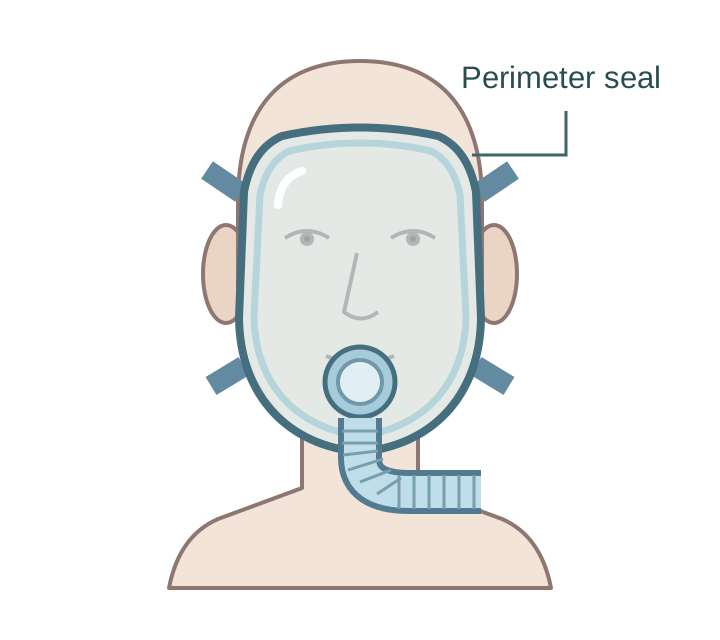
Schematic. A total-face mask encloses the eyes, nose, and mouth and seals around the face perimeter. It differs from an oronasal mask.
Total-face NIV mask schematic by RTstudy.com. CC BY 4.0. View larger.
Sources
- O'Driscoll BR, et al. BTS guideline for oxygen use in adults in healthcare and emergency settings. 2017.
- Intersurgical. Venturi valves: labeled concentrations and minimum flow guidance.
- American Association for Respiratory Care. COVID-19: Lessons Learned. Oxygen delivery device comparison. 2022.
- NSW Agency for Clinical Innovation. Non-invasive ventilation for patients with acute respiratory failure: clinical practice guide. 2023.
Last updated October 28, 2026.