Infection control and equipment processing
Standard and transmission-based precautions, N95 fit testing, the Spaulding classification for RT equipment, sterile water, and basic equipment QC.
- AirborneN95 + AIIRTB, measles, varicella, disseminated zoster
- DropletMask on entryInfluenza, pertussis
- ContactGloves + gownC. difficile, MRSA
- Respirator fit testBefore use, then yearlyAlso when model or size changes
- Reusable semicriticalHigh-level disinfectionMinimum; sterilize when possible
RTs touch the airway, the secretions, and the equipment that carries them, so you are both a likely target and a likely carrier. Infection control has two jobs: protect yourself and the next patient from the germ, and process the equipment so it doesn’t pass the germ on.
Standard and transmission-based precautions
Standard precautions apply to every patient: hand hygiene, PPE when exposure to body fluids is likely, respiratory hygiene and cough etiquette, safe injection practice, and cleaning and disinfecting equipment and the environment. Transmission-based precautions are added on top for known or suspected infections.
| Precaution | What you wear | Room | Examples |
|---|---|---|---|
| Contact | Gloves and gown for the patient or their surroundings | Single room if possible | C. difficile, MRSA |
| Droplet | Mask on entering; the patient wears one when moved | Single room if possible | Influenza, pertussis |
| Airborne | Fit-tested N95 or higher respirator; the patient masked | Airborne infection isolation room (AIIR) | Tuberculosis, measles, chickenpox, disseminated zoster |
Some infections need two at once: chickenpox is airborne plus contact. For influenza, keep droplet precautions until 7 days after onset or 24 hours after fever and respiratory symptoms resolve, whichever is longer. For procedures that create aerosols on a patient with influenza, CDC advises a fitted N95 or equivalent (a PAPR works), with gloves, a gown, and a face shield or goggles. Follow your hospital’s list of aerosol-generating procedures.
C. difficile and hand hygiene
CDC prefers alcohol-based hand rub in most situations, as long as hands aren’t visibly soiled. Soap and water is for visibly soiled hands, and during C. difficile outbreaks after caring for suspected or confirmed cases, because soap and water may remove the spores better than alcohol rub. Wear a gown and gloves, and follow your hospital’s policy, which may require soap and water every time.
N95 fit testing
A tight-fitting respirator protects you only if it seals. A fit test is required before first use, yearly after that, and when you change model, brand, type, or size, or your weight or face changes (dental work, for example). Qualitative tests use taste, smell, or cough in response to a test agent. Quantitative tests measure leakage with an instrument. The seal area must be clean-shaven.
Spaulding classification
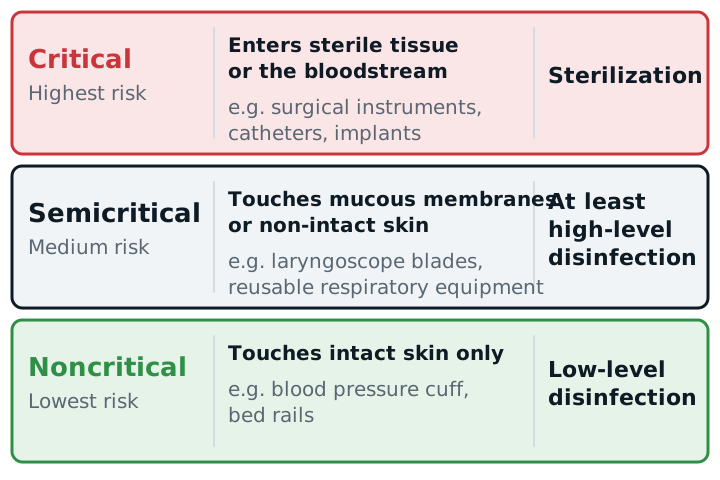
The classification sorts equipment by how it touches the patient.
| Class | Examples | Processing |
|---|---|---|
| Critical | Surgical instruments, catheters, implants | Sterilization |
| Semicritical | Laryngoscope blades, reusable respiratory therapy equipment, some endoscopes | At least high-level disinfection |
| Noncritical | Blood pressure cuffs, bed rails | Low-level disinfection |
Most RT equipment is semicritical because it touches the mucous membranes of the airway. Clean it first, because dirt protects germs. Then use steam sterilization or high-level disinfection (heat-sensitive items get low-temperature sterilization). After chemical disinfection, rinse with sterile water, then dry. If sterile water isn’t available, rinse with filtered or tap water and then isopropyl alcohol, and dry with forced air.
Sterile water and nebulizers
- Fill bubbling humidifiers with sterile water, not distilled or tap water.
- Use only sterile fluid for nebulization, and dispense it into the nebulizer aseptically. Use single-dose vials when you can.
- Between treatments on the same patient, clean, disinfect, rinse with sterile water, and dry the nebulizer.
- Don’t change a ventilator circuit on a schedule. Change it when it is visibly soiled or malfunctioning. Heat and moisture exchangers shouldn’t be changed more often than every 48 hours.
- Wash hands before and after contact with the patient and any respiratory device. Treat condensate in the tubing as contaminated.
These steps lower the risk of ventilator-associated pneumonia. See pneumonia and VAP prevention.
Equipment quality control
Calibrate an oxygen analyzer at 21% (room air) and 100% oxygen. Blood gas analyzers run control materials with known values, usually at more than one level, on the schedule your lab and regulators set, and plot the results on a Levey-Jennings chart. Westgard rules flag a run as out of control: 1-3s (one control more than 3 standard deviations from the mean), 2-2s (two consecutive controls beyond the same 2 SD limit), and R-4s (one control above +2 SD and another below −2 SD in the same run). Don’t report patient results from a failed run.
Study example
You set up a small-volume nebulizer for a patient on droplet precautions for influenza. You put on a mask and gloves before entering. You use unit-dose medication, and when the treatment ends you take the nebulizer apart, rinse it with sterile water, and let it air dry. You discard the mask, then wash your hands as you leave.
Related: pneumonia and VAP prevention, SVN setup, humidity setup.
Sources
- Centers for Disease Control and Prevention. Transmission-Based Precautions. 2024.
- Centers for Disease Control and Prevention. Infection Prevention and Control Strategies for Seasonal Influenza in Healthcare Settings.
- Centers for Disease Control and Prevention. Clinical Safety: Hand Hygiene for Healthcare Workers.
- National Institute for Occupational Safety and Health. Fit Testing.
- Centers for Disease Control and Prevention. A Rational Approach to Disinfection and Sterilization (Spaulding).
- Tablan OC, et al. Guidelines for Preventing Health-Care-Associated Pneumonia, 2003. MMWR 2004;53(RR-3).
- Westgard QC. Westgard Rules.